
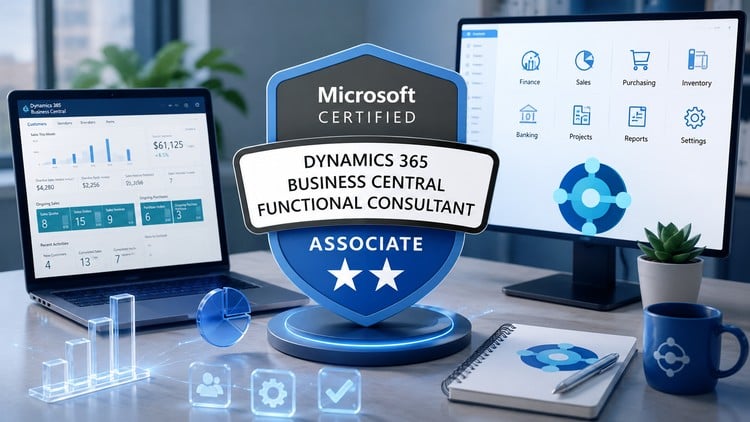
Realistic financials, setup & operations scenario questions with detailed explanations to pass the D365 MB-800 exam
What You Will Learn:
- Pass the Microsoft Dynamics 365 Business Central (MB-800) exam on your first attempt
- Master all four MB-800 domains weighted like the real exam blueprint
- Create and configure companies with assisted setup and configuration packages
- Set up financial management, chart of accounts, and posting groups
- Configure accounts payable, accounts receivable, and bank accounts
- Set up sales and purchasing documents, pricing, and discounts
- Configure dimensions, number series, and approval workflows
- Manage inventory, item ledger entries, and Business Central operations
- Understand how ledger entries relate to the general ledger
- Apply consultant-level reasoning to real Business Central scenarios
The Real Deal on Prepping for the MB-800
Look, I’ve been in the ERP ecosystem for a minute, and if there’s one thing I’ve learned, it’s that Microsoft doesn’t make it easy to just “wing” their exams anymore. The days of simple multiple-choice questions are long gone. When I sat down to look at the MB-800 Dynamics 365 Business Central Practice Exams 2026, I wasn’t looking for a shortcut; I was looking for a stress test. This course isn’t just a brain dump—it’s a comprehensive certification prep tool that actually makes you think like a functional consultant.
The real challenge with Business Central is that it sits right at the intersection of accounting logic and technical configuration. Most people fail this exam because they understand the “how” but not the “why.” This set of practice exams forces you to reconcile those two. You aren’t just clicking buttons; you’re managing the flow of data from item ledger entries back to the general ledger. It’s about building job-ready skills that actually translate to a billable environment, rather than just getting a badge for your LinkedIn profile.
What You Need Before Diving In
Don’t expect to roll into these practice exams with zero background and come out the other side a pro. While the course covers beginner to advanced concepts, you’ll get the most out of it if you have:
- A foundational understanding of basic accounting principles (debits, credits, and financial statements).
- Previous exposure to the Business Central interface, ideally through a trial or a hands-on labs environment.
- A high-level understanding of what an ERP system actually does for a mid-market business.
- The patience to read the “Detailed Explanations”—because that’s where the actual learning happens.
The Toolkit: Skills & Industry-Standard Tools
This course effectively mimics the industry-standard tools and workflows you’ll encounter in the field. By working through the scenarios, you’re essentially simulating real-world projects. You’ll be dealing with:
- Configuration Packages: Learning how to migrate data without breaking the system.
- Dimension Management: Mastering the art of financial reporting without over-complicating the Chart of Accounts.
- Posting Groups: This is the “secret sauce” of BC, and these exams hammer the logic home until it’s second nature.
- Approval Workflows: Setting up the governance that modern enterprises demand.
Career Growth & Lucrative Job Roles
Passing the MB-800 is a significant milestone for anyone looking at serious career growth in the Microsoft stack. Dynamics 365 is exploding in the mid-market, and the demand for certified professionals is vastly outstripping the supply. By mastering these domains, you’re positioning yourself for roles such as:
- D365 Business Central Functional Consultant: The bridge between client needs and technical execution.
- ERP Project Manager: Someone who understands the constraints of the system.
- Financial Systems Analyst: Internal roles for companies that have recently migrated to the cloud.
- Solution Architect: (Once you’ve paired this with a few years of experience and further certifications).
Why This Course Hits the Mark (The Pros)
- Consultant-Level Reasoning: Instead of just giving you the answer, the explanations break down the “Consultant Logic.” It explains why Option A is better than Option B in a specific business context, which is exactly how the 2026 exam is structured.
- Accurate Domain Weighting: I’ve seen too many courses spend 50% of the time on Setup and 5% on Operations. This course follows the Microsoft blueprint religiously, ensuring you don’t get blindsided by inventory management or purchasing document questions.
- Up-to-Date Scenarios: The “2026” tag isn’t just marketing fluff. It includes nuances from the latest release waves, covering how BC interacts with the wider Power Platform and modern cloud features.
- Emphasis on the “Why”: The focus on how ledger entries impact the G/L is vital. It turns you from a “user” into a “consultant” who can troubleshoot real-world projects when things go sideways.
The Honest Truth (The Cons)
If I have to be picky—and I usually am—the biggest “con” is that these exams are intense. If you’re looking for a light refresher, this isn’t it. It’s a bit of a marathon, and the complexity level might be a shock to those who have only used BC for basic data entry. It requires a significant time commitment to go through the explanations, so don’t expect to “cram” this in a single afternoon.
The Final Word
In the world of certification prep, you get what you pay for. If you want to actually understand the mechanics of Dynamics 365 Business Central and walk into your exam (and your next job) with total confidence, this is the resource to use. It transforms the daunting task of the MB-800 into a structured, logical progression that builds job-ready skills from the ground up. Overachieving on these practice tests is the best way to ensure you pass the real thing on your first attempt.

Found It Free? Share It Fast!
The post MB-800 Dynamics 365 Business Central Practice Exams 2026 appeared first on StudyBullet.com.
